
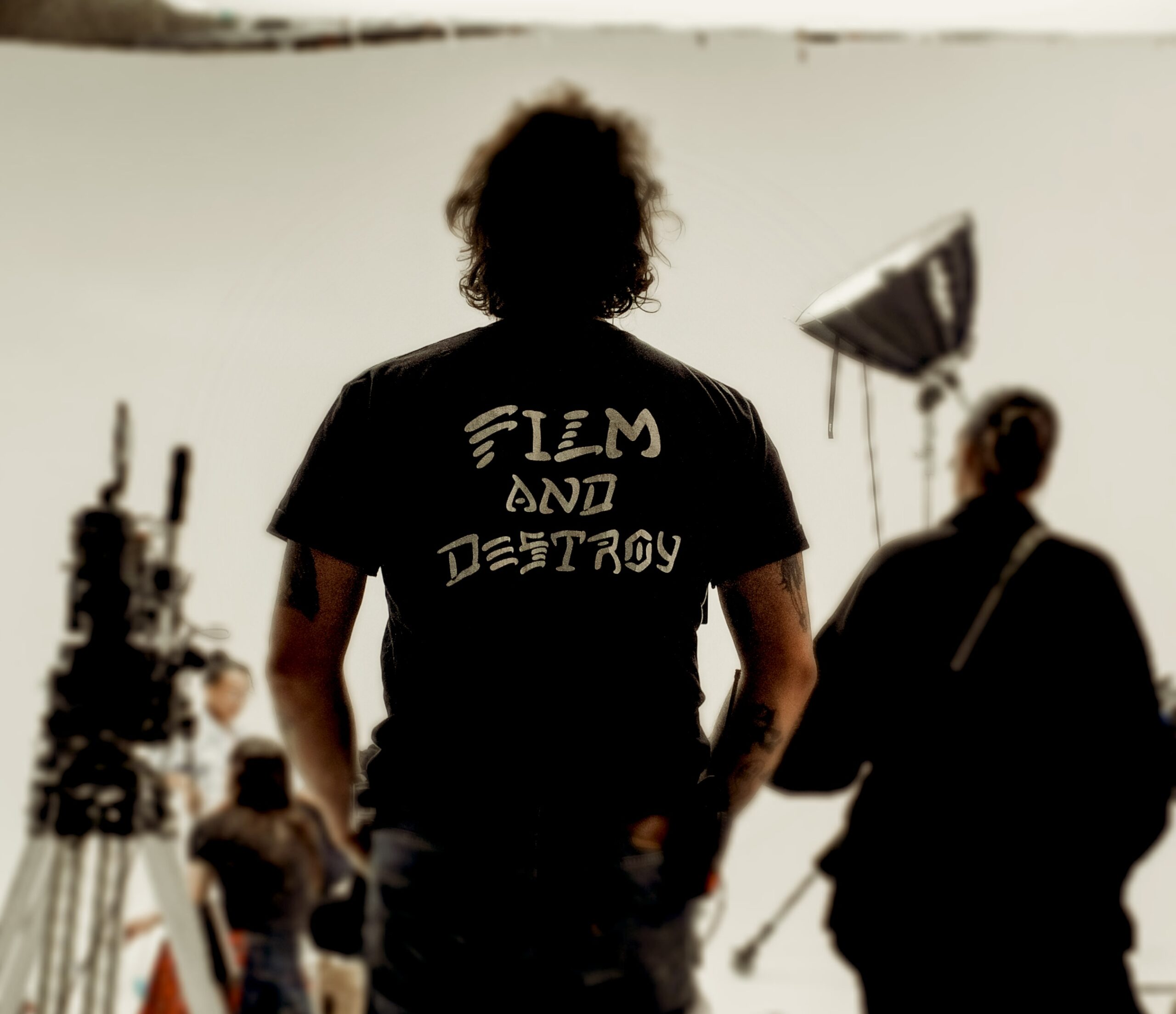
As the 4th of July fireworks burst in the sky around my neighborhood. All I could stare at was the smoky air that, I’m sure, was filled with different kinds of chemicals. That dichotomy of celebration and personal consternation is how I see the country today.
We are told that everything is fine. We should continue on as usual – go to work, buy the house, plan for the day when we retire to relax on the beach. But we are not in a good place here in the United States. We are under siege by a small group of people who want to erase parts of the population from existing, either physically or metaphorically. So in this moment, I find that my mission as a filmmaker changing. It’s an enhancement of what I have been building up to for years and I see the road ahead clearly.
It is to become this:
A PURPOSE-DRIVEN ARTIST
“Poetry in general seems to have sprung from two causes, each of them lying deep in our nature. First, the instinct of imitation is implanted in man from childhood, one difference between him and other animals being that he is the most imitative of living creatures, and through imitation learns his earliest lessons; and no less universal is the pleasure felt in things imitated.”
-Aristotle
The Greeks viewed art as a potential mechanism for social good. The Egyptians and West Africans saw it as a method of transferring knowledge and cultural identity.
We have lost this viewpoint here in the United States.
Especially in the film industry, we have been conditioned that our purpose is to receive trinkets: awards, fame, money. Anything that will have us devalue our own identity and hand it over to someone else. It’s the classic colonial blueprint of handing over gold while extracting all the resources of a people’s land. And afterwards, telling them it’s for their own good.
I followed the trinket chase for most of my career. Trying to break down what would create the best work that would get me noticed. Including a short film called Control, where I changed the ethnicity of a character to make sure it was “more universal.” This devalued my own perspective and story in order to appease some mythical patron that I was convinced would hand me the keys to the kingdom. But, not ironically, after the first Trump election in 2016.
I saw just how destructive this had been.
A SPIRITUAL CALLING
I remember the day vividly. I saw on the chair in my office, thinking of the ramifications of what had just happened. Feeling scared and angry that a good portion of the country had elected a racist as president. Wondering:
How could they do this to me?
While doomscrolling on the internet, I came across Toni Morrison’s timeless words:
“This is precisely the time when artists go to work. There is no time for despair, no place for self-pity, no need for silence, no room for fear. We speak, we write, we do language. That is how civilizations heal.”
And I felt what I can only describe as the presence of an alternate version of myself sitting next to me. It proceeded to give me a lecture:
You haven’t used your talents for anyone other than yourself. If you want something to change, it’s time to do something. Now is the time for you to get to work to help someone else.
Although I wanted to, I couldn’t argue with this version of myself. I knew that my approach to my art and my craft needed to have a different foundation. One that is vital for others to follow:
THE PATH AHEAD
First, let’s expand who we think of as a filmmaker. It’s anyone who uses visual mediums to tell a story. Filmmakers include not only the people engaged in making traditional films (which includes the entire crew). But also content creators on social media platforms. We are using cameras, light, sound and editing to craft meaning and memory.
We have been taught that our purpose is to “secure the bag”. Which is the same goal as our colonial masters from a bygone era. It is basically this:
How can I secure enough wealth (i.e., power) that have servants?
The real goal is not to have servants. It is to engage in an act of service through the art that we make. This colonial blueprint thrives when creators don’t have an internal compass. When you’re clear on your Core Message, your authentic voice, external validation becomes feedback rather than validation. You’re life and work are no longer dependent on gatekeepers because you know what you’re meant to contribute.
Film is the most powerful medium for communicating meaning. It is how societies create meaning, learn who they are and what they value. If it weren’t powerful, the largest companies in the world wouldn’t be spending so much time and effort trying to control it.
Our first step is to become Non-Dependent Filmmakers. There are many who write about this like Ted Hope and Taylor Lewis. But the framework is essentially this:
To create a foundation that is not dependent on the traditional pathways.
It calls for filmmakers to ask questions like:
Film is an expensive medium to engage in. But the purpose of it needs to go beyond simply using it to make money. So, in addition to the above, I am introducing a new framework:
Return on Impact
That film that you are writing, filming or distributing. Think of not only making money with it over your lifetime, or growing a large audience. But how can you create impact with it? Who has it connected with it? What new relationships were formed? How has it been used to create some kind of change?
We can implement this by creating 4 assessment actions:
1 – Set goals for Social/Cultural Change
2 – Measure Qualitative (Testimonials/Feedback) and Quantitative (policy changes/viewership numbers) Data
3 – Create a System of regularly collecting data and feedback
4 – Transparently communicate this to your audience, collaborators and funders
This knowledge allows us to begin this process:
CREATING WITH PURPOSE
We have a duty and responsibility as filmmakers and artists to return to a sense of purpose. To realize and reclaim our agency without ever giving it up again. We take the traditional path if it suits our greater goal:
To create meaning, enhance memory, exhibit morality and push social change.
This can be as small or large as we can have this impact and must be a lifelong mission. It is how we create agency. It is how we take back our power. It’s how we can build a cohesive and self-sustaining ecosystem that is by and for filmmakers.
This morning, consider these frameworks as a foundation:
- Purpose: How am I living my life with purpose today? What do I want to do with my innate gifts and skills to make a difference?
- Action: What is one step I can take today to help at least one other person in need?
- Authenticity: Am I communicating with honesty and authenticity? Am I trying to please others while ignoring my own needs?
- Motivation: Am I being driven by purpose, or am I reacting from feelings of guilt, resentment, anger, and fear? What negative forces are blocking me from my fullest self-expression?
- Balance: Are my practical, career-oriented goals in balance with my spiritual and artistic aspirations?
- Legacy: If I were to write my eulogy today, what would it say?
The act of making films might not be enough to get us out of the mess the United States is in. But it can be a useful tool to start building some momentum and a way of fighting back against tyranny.
So I urge all of us to use our art for the better and live in purpose. Share your foundation with a group of peers, have them do the same and then declare your findings publicly.
This is our challenge. This is our call to action. Because individually we can be distracted. But collectively, we can build a new legacy.